
Poker training has become individual and is available regularly — up to once a week. Before each session, the coach receives a detailed database analysis and already understands where to dig. To make all of this happen, we assembled a permanent teaching staff, built a separate learning platform, and created a large analytics system with an EV tree.
We started the reform from the bottom — with FunFarm's Liga 3, where the new system has already been running for more than a month. In September we launched it in FirstFund's Liga 2 as well.
At the heart of the reform we placed these questions: what exactly is holding this particular player back from growing and winning money right now? And how do we overcome it?
And we rebuilt the entire system around the answers to those questions.
Individual training sessions — at the center of learning for everyone
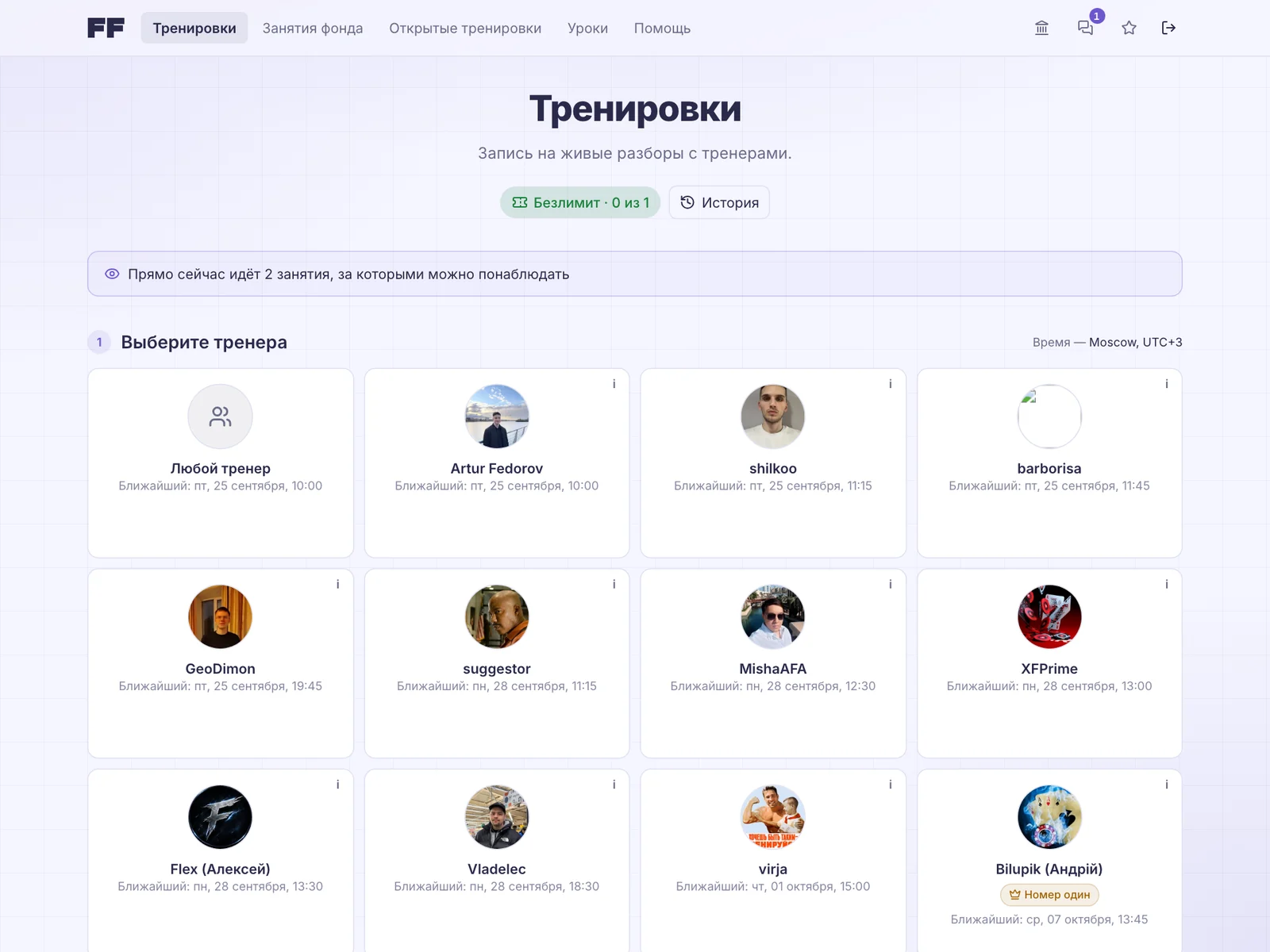
We have completely abandoned group poker training as the main format. Now, both at FunFarm and at FirstFund, the foundation of learning is individual work with a coach.
How often you can train
FunFarm Liga 3 — the session lasts an hour. Up to ABI 3 it's available after every 150 MTTs played; above ABI 3 — once a week.
FirstFund Liga 2 — the session lasts an hour and a half and is available after every 200 MTTs.
The content of the session is determined neither by a topic relevant to the group nor by the textbook chapter that it's "time to cover." What gets analyzed is the specific database of a specific player and the leaks that are affecting their results the most right now.
There are no queues: knowledge is available promptly. If a player has put in the required volume or a week has passed, they can sign up for the next one-on-one today or tomorrow. And yes, you can go to different coaches if you want and take the best from each of them.
A permanent teaching staff — and work on the coaches' own knowledge
For this we assembled a permanent teaching staff.
This isn't a set of freelancers who occasionally find a couple of hours for a session. Our coaches have dedicated working time for FunFarm and FirstFund players, and on our side we treat the development of teachers roughly the same way as the development of players.
The coaches are in constant contact with each other, discussing difficult spots and cases, consulting, aligning their approaches. Fyodor Truntsev and the training team stay in close contact with them, we review player feedback and, when necessary, even go through individual session recordings. Yes, every session is analyzed and rated by every player and coach, and we read all of it. On top of that, we then track how the topics discussed influenced in-game decisions.
In parallel, we're developing the methodology and want to train the teachers themselves more systematically going forward. We like the idea that a full-fledged career ladder for coaches should gradually emerge inside the fund: strong players will be able to grow into teachers, gain experience at lower ABIs, and over time move on to working with stronger rosters. This happened before too, but now it's more academic.
Individual database analysis — before every session
This is probably the biggest technical part of the whole reform.
Previously, truly deep individual database analysis was a separate, major research project. A quality database review for a single player could take up to eight hours of a specialist's work: setting filters in Hand2Note by hand, checking one spot after another, reviewing samples, running the results through additional software, and compiling a large individual development plan.
And the problem wasn't just the eight hours.
A human always starts an analysis with a hypothesis about where to look, in order to save intellectual resources. An experienced coach knows the typical leaks and opens the usual filters first. That's rational — manually going through the entire game tree is impossible.
But that's exactly why you can miss the problem that regularly eats up the most money for a particular player. Didn't get around to opening that exact spot, underestimated its significance.
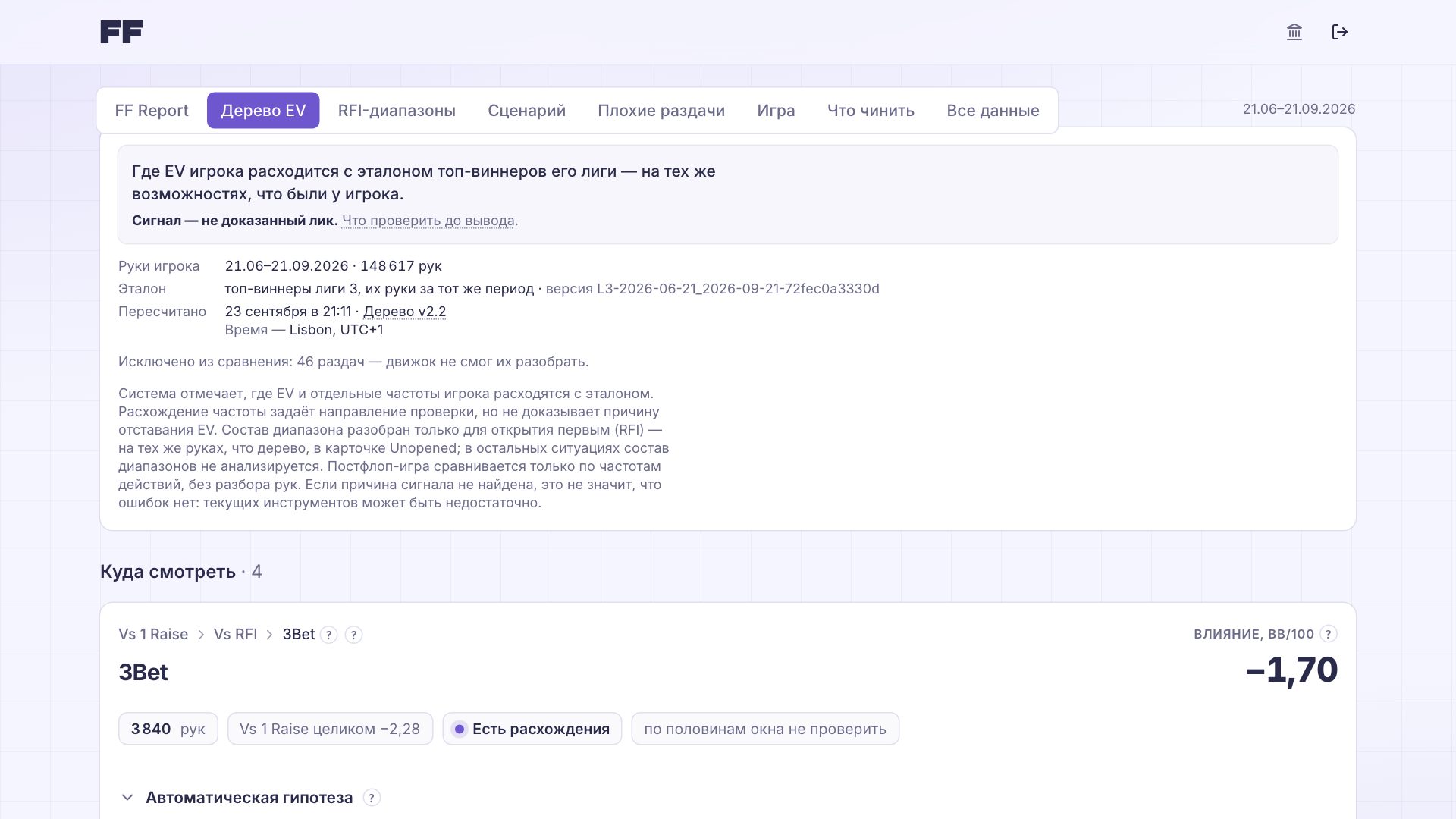
To remove the bottleneck of endless manual searching, we built an automatic EV tree.
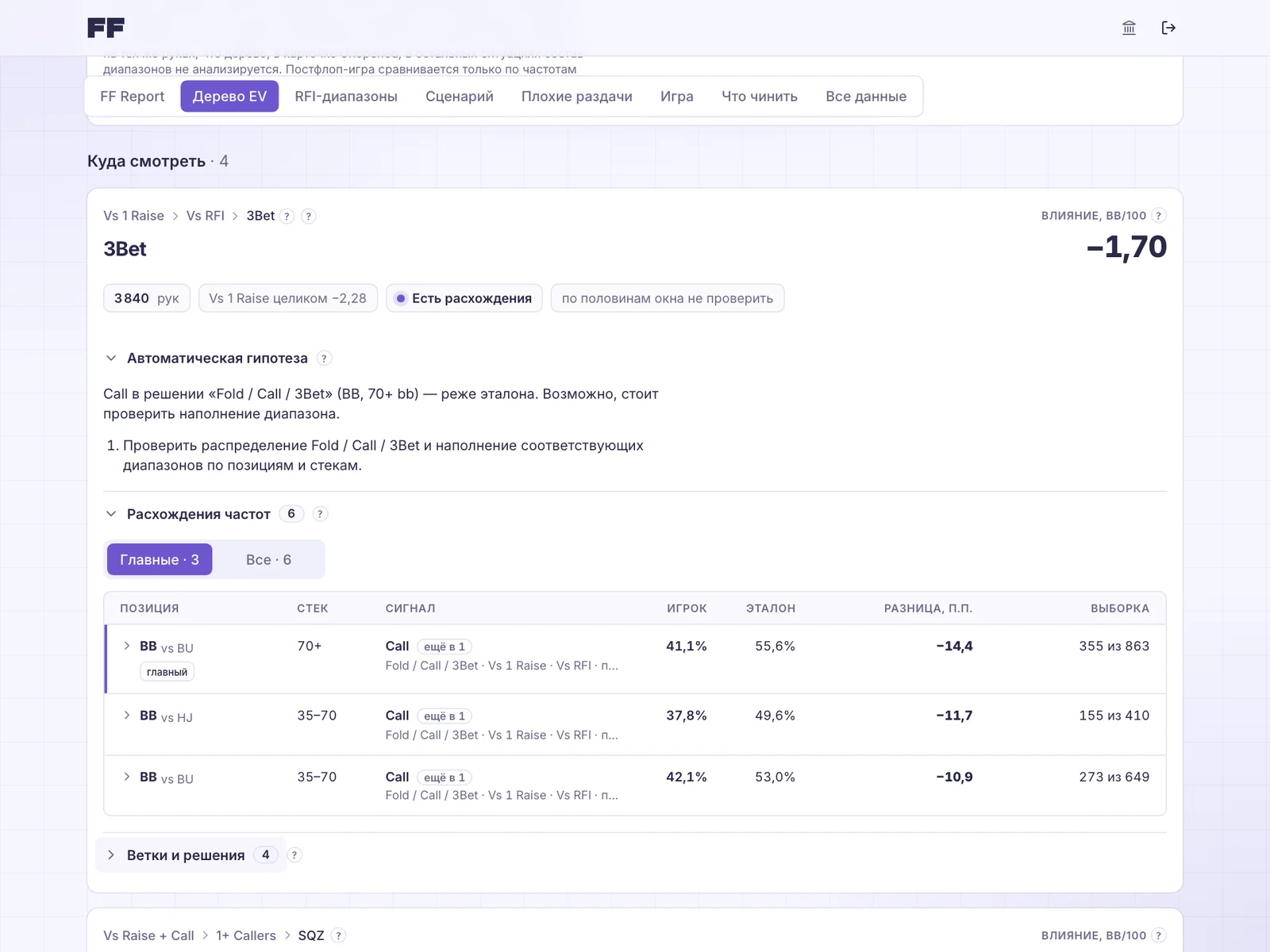
It breaks the game down into a huge number of branches and spots and helps the coach see where a specific player's most expensive deviations are. And not just "the stats look strange here," but how often the situation arises and how strongly that mistake potentially affects overall EV.
This is where the principle for choosing a session topic changes.
First we work on whatever eats the most money.
Not donk bets on the river because they're interesting to talk about. Not some specific resteal because the player happens to feel like discussing it today. If the EV tree shows that the most money is currently leaking somewhere else, we'll fix that first.
A real example. The system is already finding fairly non-obvious things. For instance, with one player it flagged a problem with overlimping on the SB in limped pots. Overall the database looked fine, and an experienced Liga 2 coach later said he simply wouldn't have opened that filter himself: nothing indicated that was where to look.
Now such things can be found before every session, rather than a few times a year during a huge manual review.
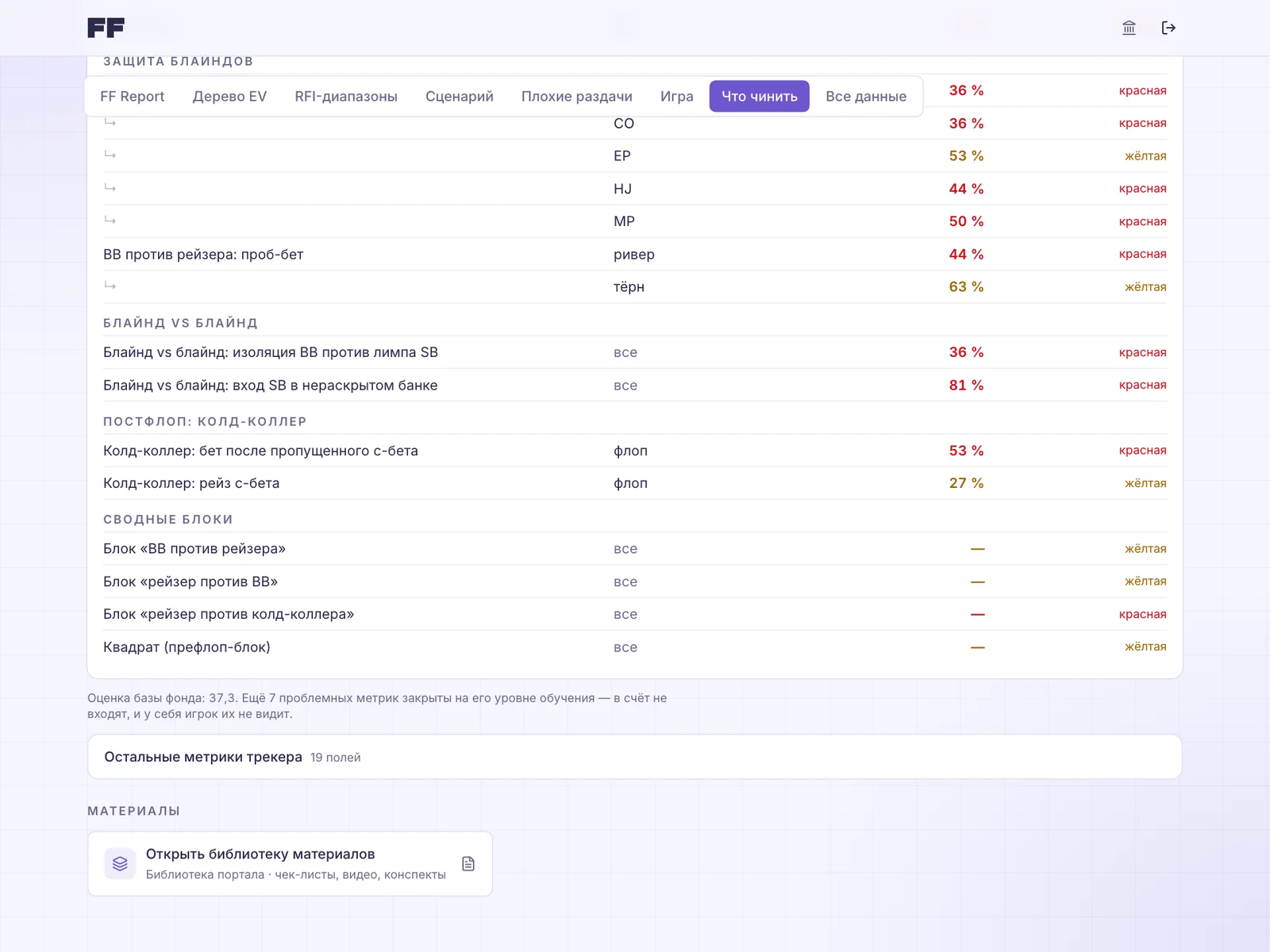
That said, the EV tree does not replace the coach. A human still has to look at the sample, assess the context, understand the cause of the leak, and decide what to do about it. We simply take away the most mechanical part of the work — finding the needle in the haystack of data — and leave the part where expertise is genuinely needed.
Open sessions: learning from other people's mistakes
When we launched one-on-ones, we fairly quickly realized that keeping this experience entirely within the "player — coach" pair isn't necessary either.
That's how open sessions came about.
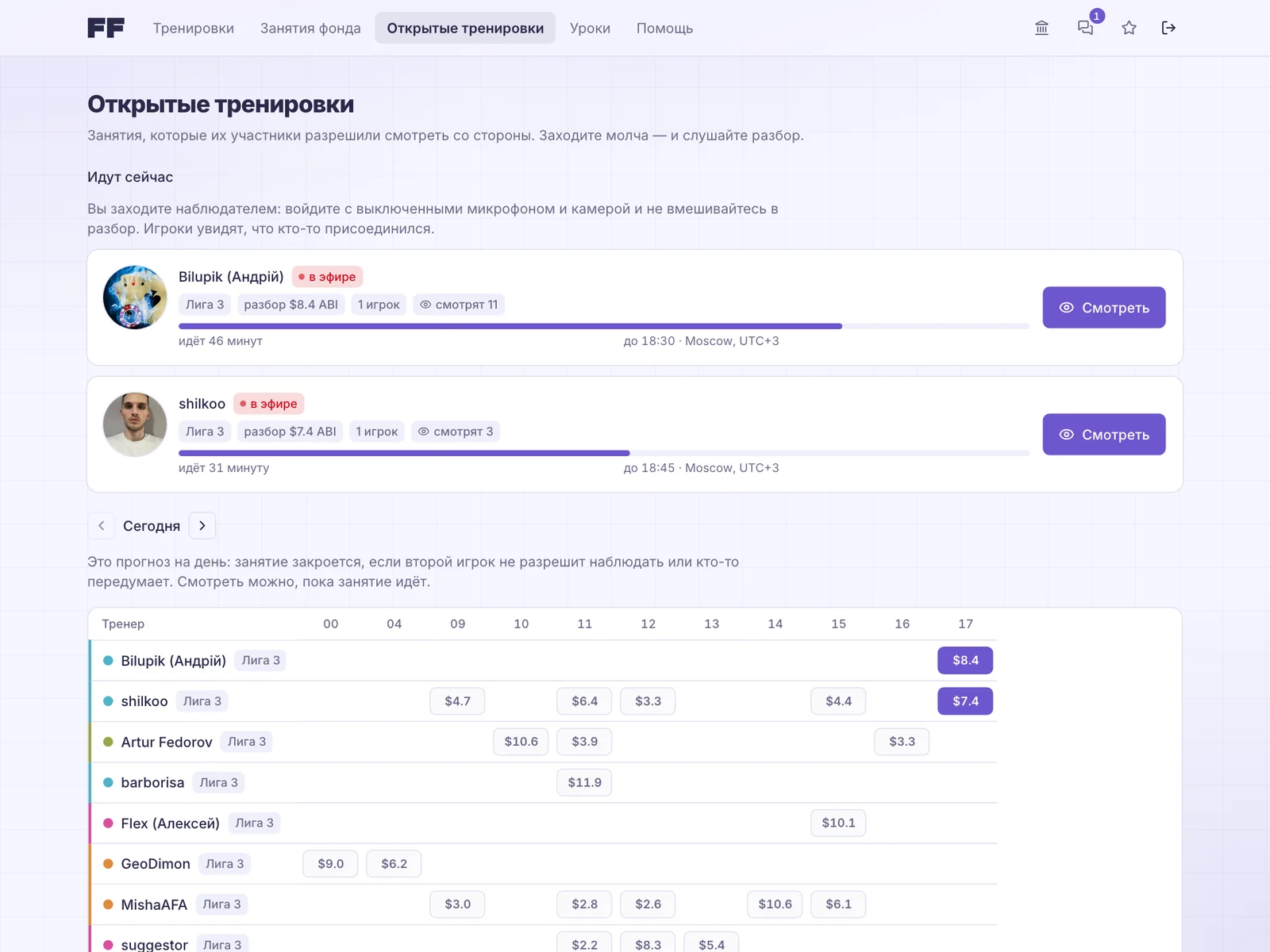
If the player whose database is being reviewed doesn't mind, other members of the fund can join the session as listeners. They don't interfere in the session and don't speak, but they can watch the analysis itself, the hands, the leaks, and the coach's explanation.
This way your own session is always devoted specifically to your game, and on top of that you can learn from other people's mistakes and see far more interesting spots than you'd personally run into.
As a bonus, this is also a way to pick a coach for your next session.
The professional track — plan your poker career
Poker skill isn't only about how a person plays a hand. It's also understanding EV and variance, dealing with tilt, multi-rooming, a work schedule, volume, and generally the ability to build a career as a professional player.
Previously we delivered part of this knowledge through separate mental intensives. They were in enormous demand: when registration opened, the spots could run out in literally a few minutes.
And then we looked at the results and realized that this shouldn't be scarce knowledge at all.
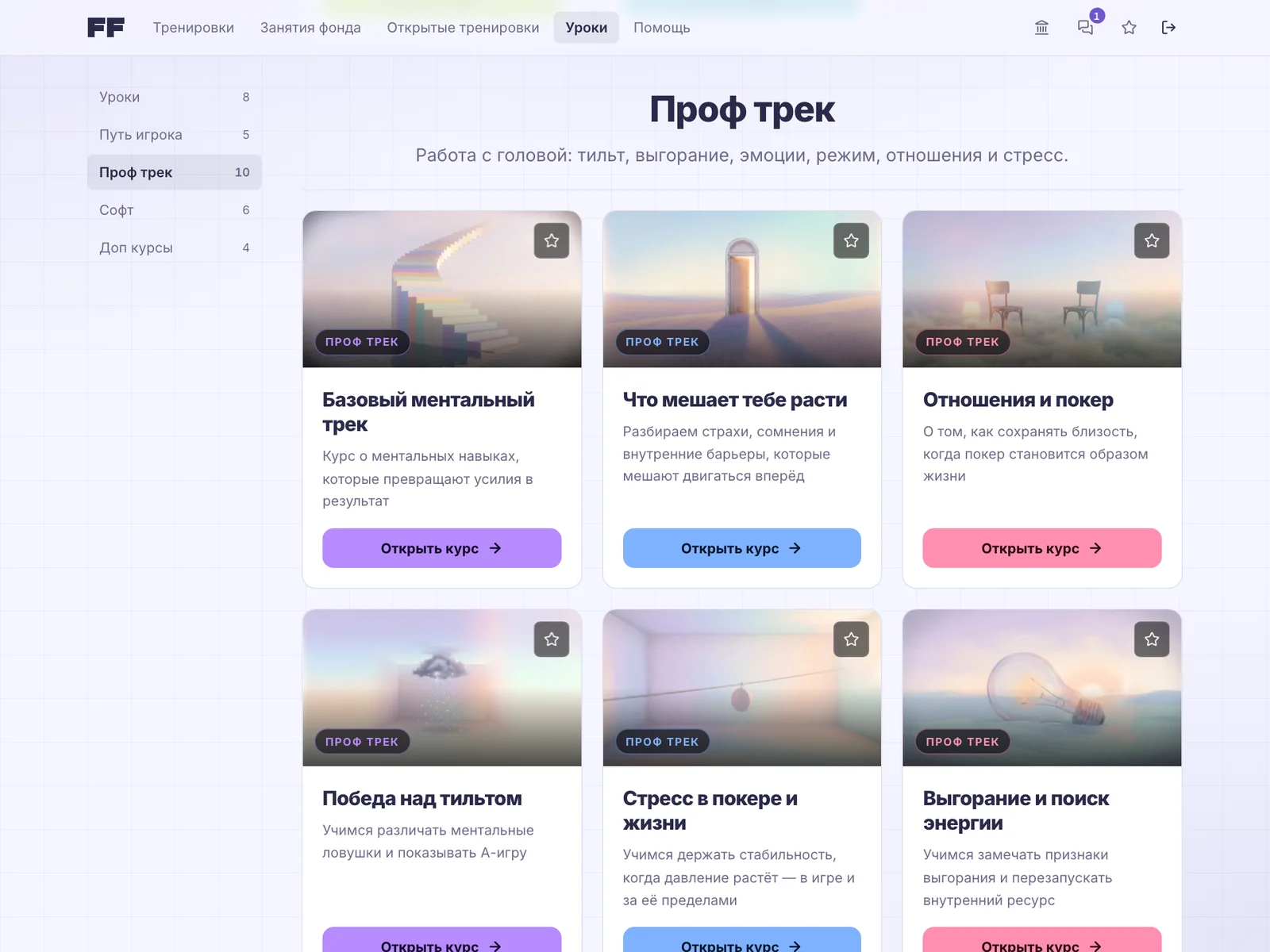
So we created a separate professional track, available to all players without exception. As a person accumulates career volume, they receive sessions on the questions they typically face at that stage: from understanding variance to multi-rooming, tilt, and organizing work sessions.
What you previously had to fight for when the next intensive opened is now becoming a regular part of the training.
The learning platform: sign up, choose a coach, and get everything in one place
For the new training system we built a separate online platform from scratch.
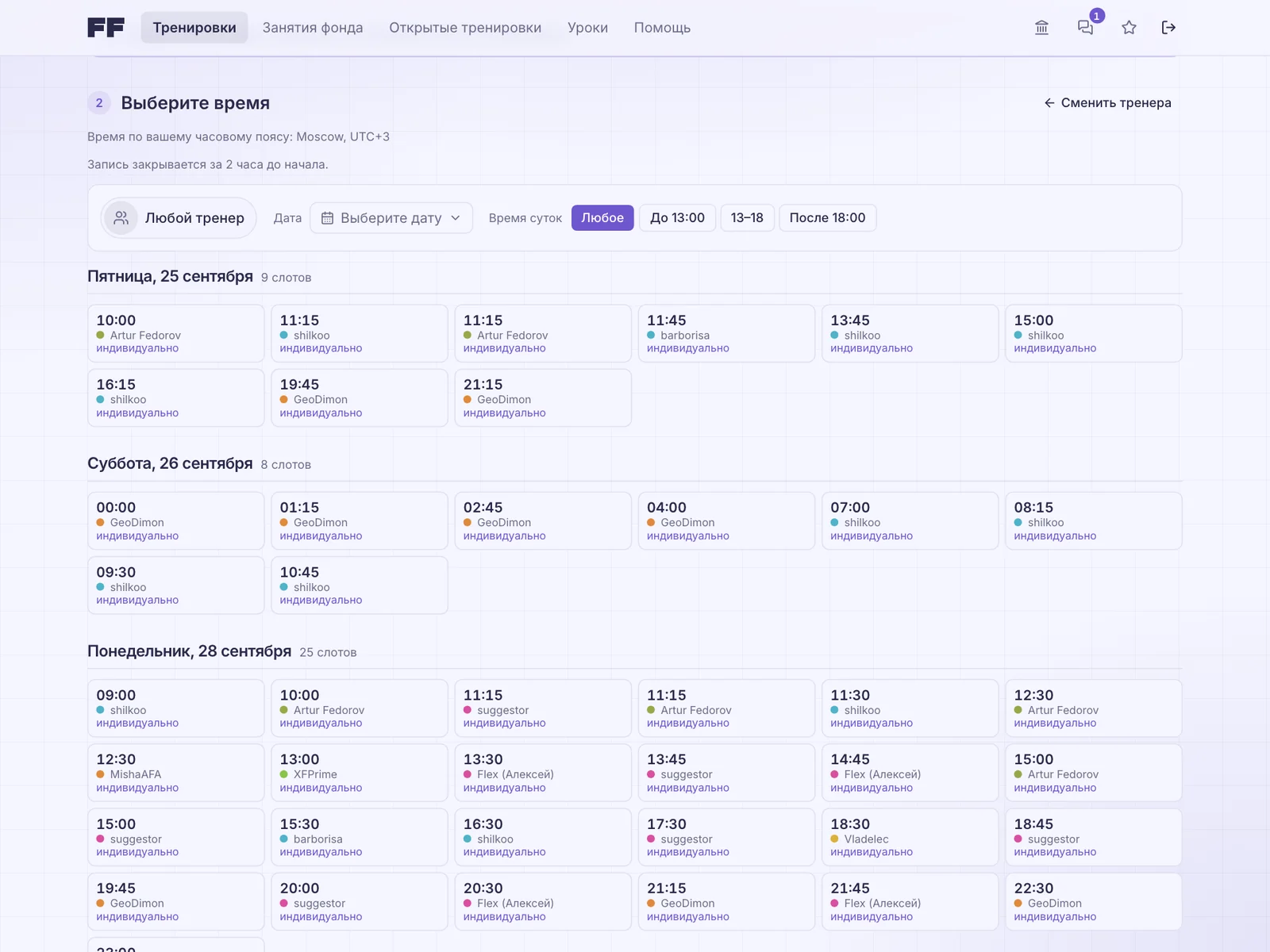
Instead of messaging an administrator, the player opens the calendar, sees the available slots, can choose a familiar coach or look at who else is available, and books a suitable time themselves.
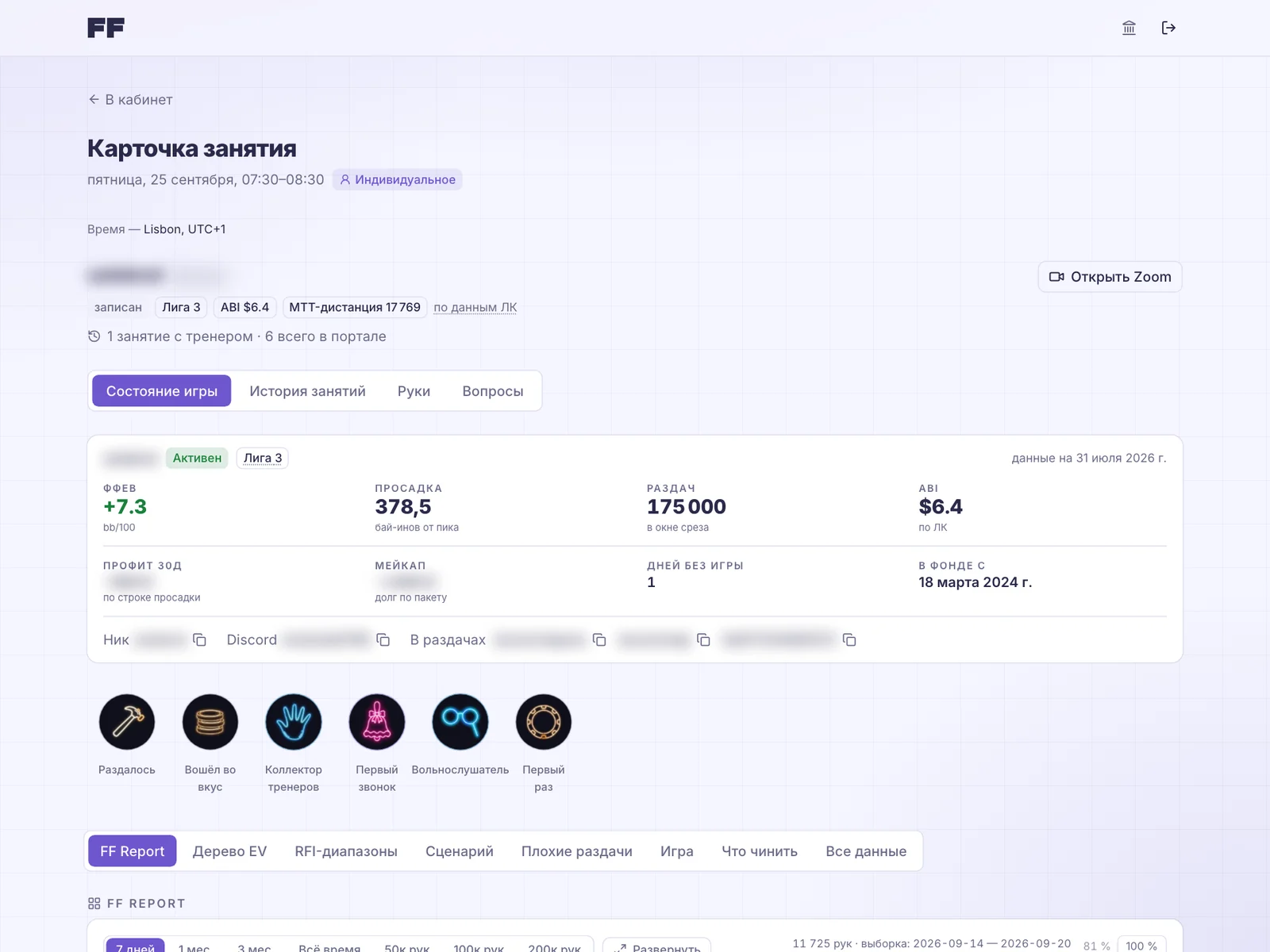
The same place gathers information about the player for the coach: ABI, volume, winrate, the history of previous sessions, recommendations, and current problems. In other words, before a session there's no need to gather context from various chats and try to remember what was going on a month ago.
And what about the "Player Path" learning materials?
We moved and opened up the "Player Path" too — it now works as a knowledge base with an AI bot attached, which you can open and ask questions. The videos got transcripts, the tests and trainers stayed inside, and you can ask all of it a free-form question.
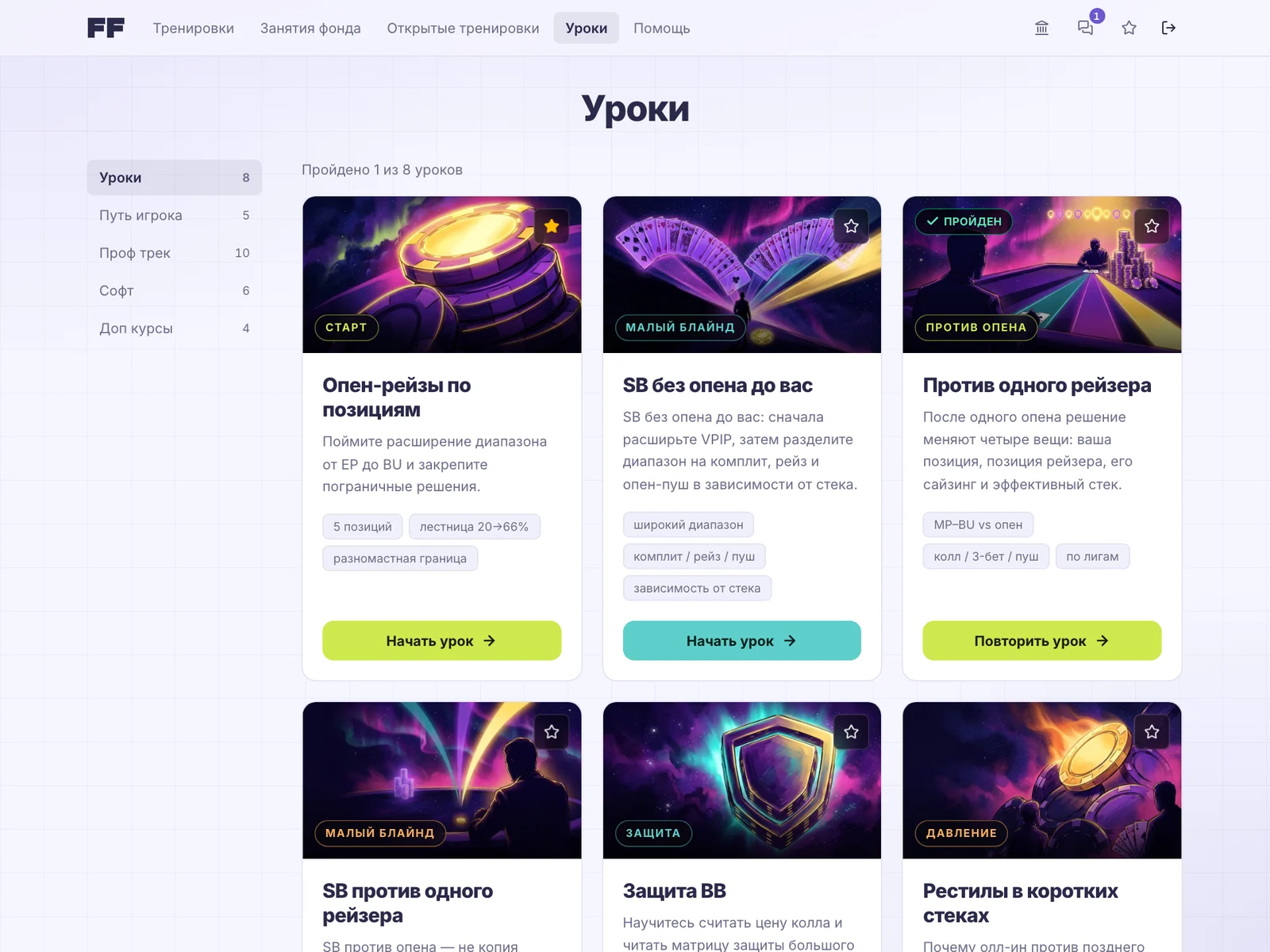
As a result, the platform has become not another mandatory course you have to "finish," but a place the player comes to for the tool they need: to book a coach, watch material, drill a specific spot, or go back to previous recommendations.
Anyone who wants to learn has absolutely all the tools for it in a convenient format.
Trainers: build experience in a spot that rarely comes up at the tables
Separately, we spent quite a while working on the trainers themselves. We didn't want to build yet another test generator where after a lesson you just pick the right answer.
In the end we made an actual game simulator.
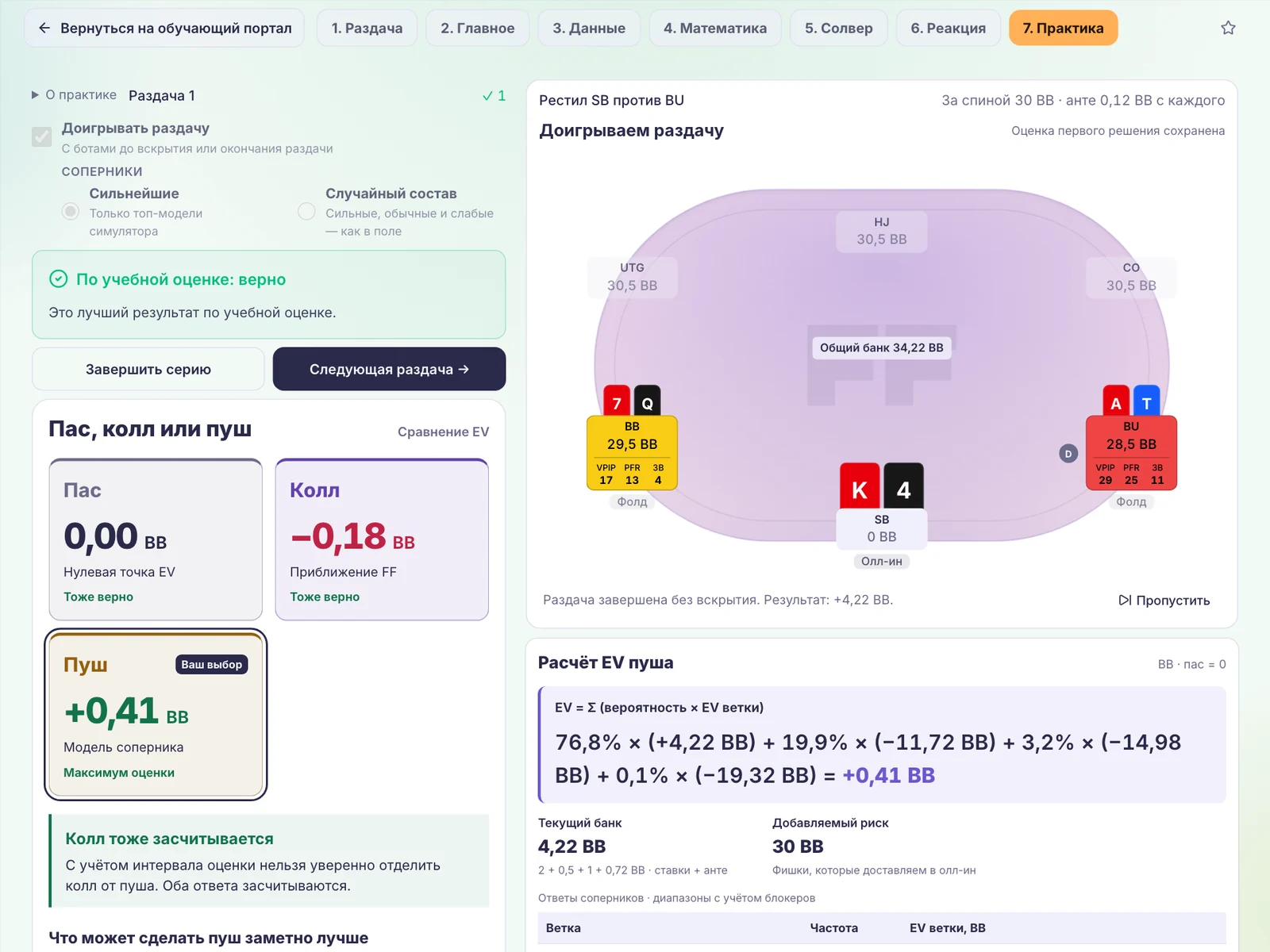
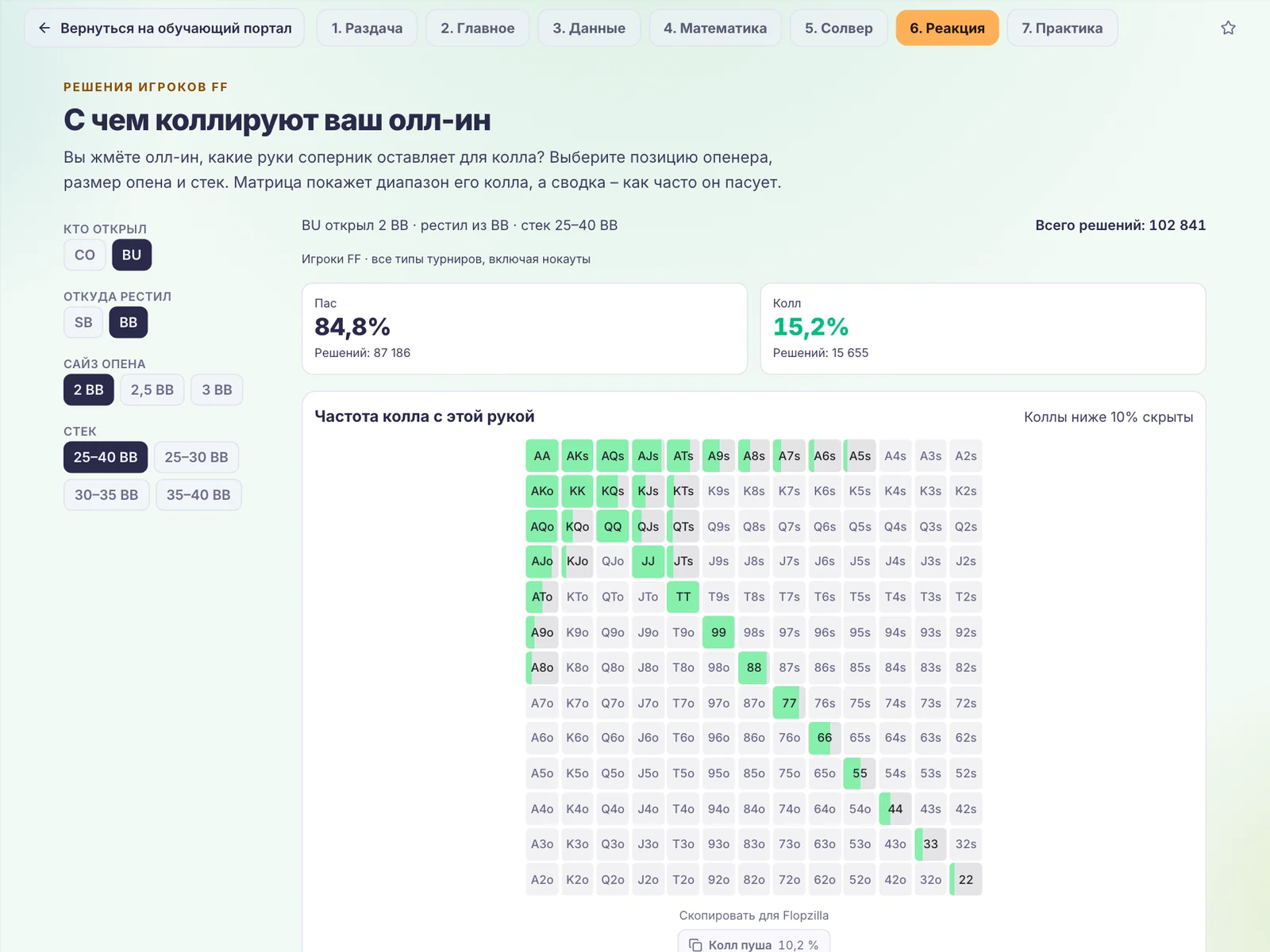
For example, in it you can play out resteals against a fish many times in a row and see which hands he opens, which he calls with, and which he folds. At a normal table you shove all-in, the opponent mucks — and in most cases you have no idea what he did it with. Naturally accumulating a large sample of the same rare spot can take a very long time.
In the simulator you can repeat it again and again and build up the needed experience far faster.
You can compare it to a flight simulator: a pilot doesn't need to wait a hundred years for a hundred real thunderstorms in order to practice landing in a storm a hundred times. We want to work with poker situations in roughly the same way — concentrating experience where it accumulates too slowly at real tables.
And we keep improving all of it
We don't consider the current system finished. In the first five weeks after launch we managed to change it four times — based on data, player reviews, and coach feedback.
First we road-tested everything in FunFarm's Liga 3, and since September the new approach has been running in FirstFund's Liga 2 as well. Going forward, we'll keep developing the EV tree, the trainers, the professional track, the platform, and the coaches themselves.
The goal, meanwhile, stays very simple: a player shouldn't have to guess what they need to learn right now.
The system should help find the most expensive leaks, give access to the right coach and the right tools, allow the problem to be worked on — and then look at the database again and figure out what's now holding them back the most from growing and winning money.
Come join us =)